

Strong indications emerged weekend that the World Bank has expressed readiness to deliver its counterpart funding of the nation’s massive $1.6bn National Digital Infrastructure Scheme expected to push Nigeria’s broadband network from 35,000 to over 125,000 kilometres. Whereas the general target is to grow digital services up to the speed of needs by industries and Nigerians, it is believed that on completion of project, more Nigerians will be adequately connected to the digital world, thus bridging the current divide that is frustrating growth.
Latest fact showed that the bank had approved the $500m Building Resilient Digital Infrastructure for Growth loan for Nigeria on October 6, 2025, to significantly boost broadband access across unserved and underserved areas of Nigeria.
Otherwise, with a total cost estimated at $1.6bn, the World Bank will contribute $500m through a concessional credit from the International Development Association, while the remaining funds will come from private-sector sources.
Business Hilights recalls that in faraway May 2024, the Federal Government approved a special-purpose vehicle to support the delivery of an additional 90,000km of fibre-optic cable for universal internet access across Nigeria.
An SPV is a separate legal entity created to achieve a specific goal or project. In this context, the SPV will manage the fibre optics project, overseeing its implementation, finances, and operations.

Additional details of the new national fibre rollout showed that a dedicated Project Implementation Unit will manage day-to-day execution, with overall financial management handled by the Federal Project Financial Management Department in the Office of the Accountant General of the Federation.

Besides, the project also includes technical assistance to federal government agencies to support the use of high-quality broadband in targeted areas, as well as funding for project management, monitoring and evaluation, environmental and social safeguards, grievance redress mechanisms and independent audits.
The agreement places strong emphasis on environmental and social standards, requiring compliance with an Environmental and Social Commitment Plan. It also mandates the establishment of an accessible grievance mechanism for affected communities and strict reporting obligations to the World Bank.
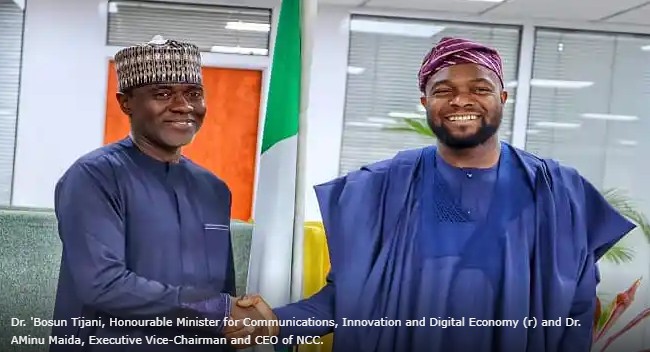
The Minister of Communications, Innovation, and Digital Economy, Bosun Tijani, said in a statement that the project would strengthen the national backbone for internet access and optimise the use of eight submarine cables already landed in Nigeria.
Tijani also announced in August 2025 that Nigeria was moving closer to building one of the largest digital backbones in the developing world. He unveiled the technical design for Project BRIDGE — a $2bn fibre-optic expansion initiative that will extend Nigeria’s broadband network from 35,000 to over 125,000 kilometres.